How to Compare Home Insurance Quotes So the Cheapest One Is Really the Cheapest
Two home insurance quotes can be hundreds of dollars apart and still not be for the same coverage. Here's how to line them up.

Comparing home insurance looks easy. You ask for a few quotes, you look at the yearly price, and you pick the lowest one.
The catch is that a home policy has a lot of moving parts. One quote might insure your house for less than it would cost to rebuild. Another might have a much higher deductible for wind damage. A third might pay for your belongings at their used value instead of what it costs to replace them. Each of those makes the price lower, and none of them shows up in the headline number.
Here's how to make the quotes comparable before you compare them.
1. Start with your declarations page
If you already have a policy, your declarations page (the "dec page") is the one- or two-page summary at the front. It lists each coverage, its dollar limit, your deductibles and any add-ons, which insurers call endorsements. Your insurer or agent can send you a copy, and it's usually available in your online account.
Use it as your template. Ask every company to quote the same limits and deductibles first. You can adjust later, but you need a common starting point.
2. Match the dwelling coverage
Dwelling coverage, often labeled Coverage A, is the amount the insurer would pay to rebuild your house. It's the biggest driver of the price, and most of your other limits are set as a percentage of it.
The number should be based on what it would cost to rebuild, not on what the house would sell for. Different insurers use different cost estimators, so their suggested amounts can be far apart. If one quote has a noticeably lower dwelling limit, that explains part of the lower price. See replacement cost vs. actual cash value for how to think about the number.
3. Check how claims are paid
Two policies with the same limits can pay very differently. Look for whether the house, the roof and your belongings are each covered at replacement cost (what it costs to repair or replace with new) or actual cash value (replacement cost minus depreciation).
Pay special attention to the roof. Some policies pay actual cash value on older roofs, or use a schedule that pays a smaller share as the roof ages. On a 15-year-old roof, that can mean thousands of dollars out of your pocket.
4. Match the deductibles, all of them
Many policies have more than one deductible. There's the standard one, usually a flat amount like $1,000 or $2,500. There may also be a separate deductible for wind, hail or named storms, and it's often a percentage of your dwelling coverage instead of a flat amount.
A 2% wind deductible on a home insured for $400,000 is $8,000. Make sure you're comparing the same deductibles on every quote. We cover this in how home insurance deductibles work.
5. Compare liability and the smaller coverages
- Personal liability. Pays if you're legally responsible for someone's injury or property damage. Limits commonly run from $100,000 to $500,000. Raising it is usually inexpensive.
- Personal property. Coverage for your belongings, typically set at 50% to 70% of your dwelling limit.
- Loss of use. Pays extra living costs, like a rental, if a covered loss makes your home unlivable.
- Medical payments to others. Small amounts for a guest's medical bills, regardless of fault.
6. Look at the endorsements and exclusions
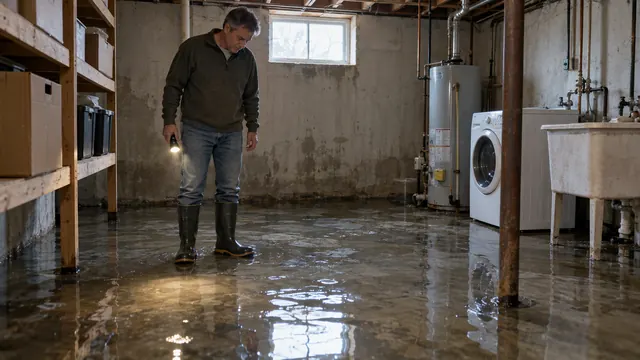
Add-ons are where quotes quietly differ. Common ones include water backup from sewers and drains, extended replacement cost, ordinance or law coverage, and scheduled coverage for jewelry or other valuables. One quote may include several of these while another includes none.
Also ask what's excluded. Standard policies don't cover flood or earthquake damage. See what home insurance doesn't cover.
7. Then look past the price
Once the quotes match, price matters a lot. It's also worth checking the company's financial strength rating and its complaint record. Your state's insurance department publishes complaint data, and the National Association of Insurance Commissioners (NAIC) has a free company lookup.
Quick comparison checklist
- Same dwelling (Coverage A) limit on every quote
- Replacement cost or actual cash value, for the house, the roof and your belongings
- Same standard deductible and same wind or hail deductible
- Same liability limit
- Same endorsements, such as water backup and extended replacement cost
- Discounts applied correctly
The bottom line
A lower price is only a better deal when the coverage under it is the same. Line the quotes up against your current policy, check how claims would be paid, and then let price decide.
Note: This article is general information, not insurance, legal or financial advice. Coverage, requirements and pricing vary by state and insurer; check your policy and your state's insurance department.