Replacement Cost vs. Actual Cash Value, and How Much Dwelling Coverage You Need
Two phrases on your policy decide how much a claim check will be. Here is what they mean and how to set your coverage amount.

When you file a claim, the amount you're paid depends on two things: your coverage limit, and how your policy values what was damaged. That second part comes down to two terms, replacement cost and actual cash value. The difference can be tens of thousands of dollars.
Replacement cost
Replacement cost coverage pays what it costs to repair or replace the damaged property with new materials of similar kind and quality, without subtracting for age or wear.
With many policies, the money comes in two steps. The insurer first pays the depreciated value. Once you've actually made the repair or replaced the item and sent in the receipts, it pays the rest. Check your policy for the deadline to complete repairs and claim that second payment.
Actual cash value
Actual cash value (ACV) is replacement cost minus depreciation. It pays what the item was worth at the time of the loss, given its age and condition.
An example: a windstorm destroys a 15-year-old roof that would cost $18,000 to replace. A replacement cost policy pays the $18,000, minus your deductible. An ACV policy might value that aging roof at $7,000 and pay that amount minus your deductible. You'd cover the rest.
Where each one shows up
- The house. Most standard policies cover the dwelling at replacement cost, as long as you insure it for enough (see the 80% rule below).
- The roof. Increasingly an exception. Some insurers cover older roofs at ACV, or use a payment schedule that shrinks as the roof ages. This is common in areas with frequent hail and wind claims.
- Your belongings. Often covered at ACV by default. Replacement cost for personal property is usually an inexpensive upgrade.
Market value is not rebuild cost
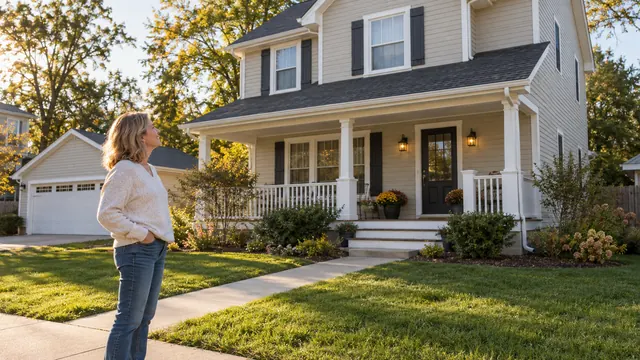
Your dwelling limit should be the cost to rebuild the house, not its sale price. The two can be very different. Market value includes the land and the neighborhood. Rebuild cost is labor and materials: framing, roofing, wiring, plumbing, finishes, plus debris removal and permits.
In an expensive area, rebuild cost may be well below what the home would sell for. In a low-cost area, it can be higher. Insurers use cost-estimating software to suggest a figure, based on square footage, construction type, and features like the number of bathrooms and the quality of finishes. Check that the details they used are right.
The 80% rule
Many policies require you to insure the home for at least 80% of its replacement cost to be paid in full for a partial loss. If you're below that, the insurer can reduce the payment in proportion.
For example, say a home would cost $400,000 to rebuild. The 80% threshold is $320,000. If it's insured for only $240,000, that's three-quarters of the required amount, so the insurer might pay only three-quarters of a $40,000 kitchen fire claim. Exact terms vary, so read the loss settlement section of your policy.
Protection if costs run over
Construction costs can jump, especially after a disaster when many homes are being rebuilt at once. Two endorsements help:
- Extended replacement cost. Pays a set percentage above your dwelling limit, commonly 25% to 50%, if rebuilding costs more than expected.
- Guaranteed replacement cost. Pays whatever it costs to rebuild, even above the limit. It's less widely available.
Many policies also include inflation guard, which raises your dwelling limit a little each year. It helps, but it isn't a substitute for checking the number yourself.
When to revisit your limit
Review your dwelling coverage when you finish a renovation, add square footage, upgrade a kitchen or bathroom, or if it's simply been a few years. Tell your insurer about improvements. Otherwise the policy is still insuring the house you used to have.
Check these on your policy
- Is the dwelling covered at replacement cost?
- Is the roof covered at replacement cost or actual cash value?
- Are your belongings covered at replacement cost?
- Is your dwelling limit based on a current rebuild estimate?
- Do you have extended or guaranteed replacement cost?
The bottom line
A lower premium sometimes just means actual cash value where another quote offers replacement cost. When you compare quotes, check how each one would pay a claim, not only what it costs.
Note: This article is general information, not insurance, legal or financial advice. Coverage, requirements and pricing vary by state and insurer; check your policy and your state's insurance department.